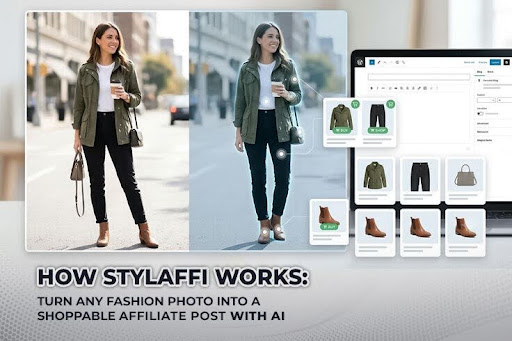
A creator posts an outfit photo: jacket, jeans, sneakers, sunglasses, bag. Four items, maybe five. In most workflows, only one gets a link, if any do. The rest just sit there, seen by thousands of people and earning nothing.
That gap between what a photo shows and what it actually monetizes is the specific problem Stylaffi is built to close. Not by asking creators to work harder at tagging, but by removing the tagging step as manual work altogether.
This is not a new problem. It is the same one creators have complained about for years on platforms built around one-link-per-post tagging: the outfit gets seen, the sneakers get asked about in comments, and none of it converts because nobody built a link for them in time.
The 4-Step Flow of How Stylaffi Works
Stylaffi's creator side runs in four steps: upload, AI enhancement, smart tagging, and publish-and-track. Each one solves a distinct, named problem rather than a vague "AI magic" claim.
1. Upload in Seconds
A creator drops in a photo or video the same way they would to any app. No separate tagging session, no bookmarklet, no switching tabs to find a retailer link before posting.
2. AI Post Enhancement
The system sharpens clarity and lighting and suggests captions. This part is closer to what most creators already expect from editing tools, and it exists so the content still looks worth following, not just worth clicking.
3. Smart Item Tagging
This is the actual shift. Stylaffi scans the image, identifies visible items, and matches each one to a product option automatically. A jacket, jeans, sneakers, and sunglasses in one photo can all get identified in the same pass, not just the single item a caption happened to mention.
4. Publish & Track
Once live, the creator sees what people save, tap, and revisit, which is a more honest signal than likes for knowing what content is actually driving purchase interest.
Why is Multi-Item Detection an Important Part?
Most affiliate tools were built around one link per post. A creator picks the item they want to promote, generates a link for it, and everything else in the frame goes unmonetized by default.
Stylaffi's tagging works the other way. It looks at everything identifiable in the shot, not just the one product a caption names. That matters for a few concrete reasons:
- A single outfit photo can carry four or five commissionable items instead of one
- Items a creator forgot to mention, or didn't think to link, still get captured
- The creator does not have to decide in advance which product "counts"
None of this means every item gets a perfect match every time. Detection works item by item, and the system returns the closest product match it can find, not a guaranteed exact one. That distinction matters, because overpromising perfect recognition would set creators up to expect something the technology cannot yet deliver on every single post.
What Happens on the Users' Side?
A creator's audience interacts with a feed, not a dashboard. Stylaffi's user flow is built around that difference:
Scroll the Feed: People watch posts from creators they already follow, the same way they would on any short-video feed.
Tap the Item: Instead of screenshotting an outfit or asking "link please" in the comments, a viewer taps directly on the item they want.
View Options Quickly: Tapping opens a product page with the closest matches and any available deals, with price context shown up front instead of buried in a bio link.
Save or Buy: A viewer can bookmark an item for later or complete the purchase in the same session, which is where most impulse interest either converts or disappears.
This solves a real, specific frustration: the gap between seeing something in a video and actually finding it to buy. A viewer who has to leave the app, guess at a brand name, and run their own search has usually lost interest by the time they get an answer.
It also solves a smaller but persistent trust problem. Viewers who tap a link only to land on the wrong product, or an out-of-stock one, stop tapping links from that creator altogether. Deal pages that show accurate price context up front are as much about keeping that trust as they are about conversion.
Old Way vs. Stylaffi
It is worth being specific about what actually changes, rather than describing the difference in adjectives.
The old way creators are used to:
- Manual product linking, one item at a time, per post
- Items in the frame that never get tagged at all
- Links that break when a retailer changes a URL
- No price or deal context shown to the shopper
- Attribution that is hard to verify or reconcile
With Stylaffi:
- Items get tagged automatically as part of upload, not as a separate task
- Multiple items per post get captured, not just one
- Links are tracked and monitored so they keep working
- Deal pages show price context at the moment someone taps
- Attribution is visible to the creator through the analytics dashboard
The honest caveat here: Stylaffi is in soft launch. Waitlisted creators are getting early access as the product rolls out, which means the catalog of brands and the accuracy of matching will keep expanding rather than starting at full scale on day one.
What does this mean for Brands?
For a brand, the practical shift is inventory, not marketing spend. Every post that features a product, whether a creator mentioned the brand by name or not, becomes a potential point of sale instead of an untracked impression.
Brands working with Stylaffi also get something manual affiliate programs rarely produce cleanly: visibility into which items get shown and tapped organically, across categories from fashion and footwear to beauty, accessories, home, fitness, travel, and kids. That is closer to real demand signal than a report built only from items creators chose to caption.
What does this mean for Creators?
The pitch to a creator is not "make more content." It is "stop losing money on the content you're already making." A creator who posts daily and never manually tags half the items in frame has been leaving commission on the table for every one of those posts.
Stylaffi's bet is that removing the tagging step, rather than adding another feature on top of it, is what actually changes a creator's monthly number. Enhancement helps a post look better. Tagging is what decides whether that post ever gets paid.
Where to Start
Stylaffi is currently in soft launch, with early access available through the waitlist for creators and demo requests open for brands and retailers interested in partnership. The core claim is a narrow one: any photo you post can carry a working, trackable link for every item in it, not just the one you remembered to mention.
Ready to Start Monetizing Every Item?
Join Stylaffi today and turn every fashion photo into a shoppable post. Our AI-powered platform automatically tags all visible items, so you never leave money on the table.
Join the Waitlist